The Vast Unknown Beneath Our Feet
Ask most people what humanity’s greatest frontier is, and they’ll likely point to space. Mars rovers capture headlines. Telescope discoveries trend on social media. Yet beneath our own waves lies a realm far more mysterious and accessible than any distant planet. The ocean covers 71 percent of Earth’s surface, but roughly 80 percent of it remains unmapped at the resolution scientists need to understand it fully.
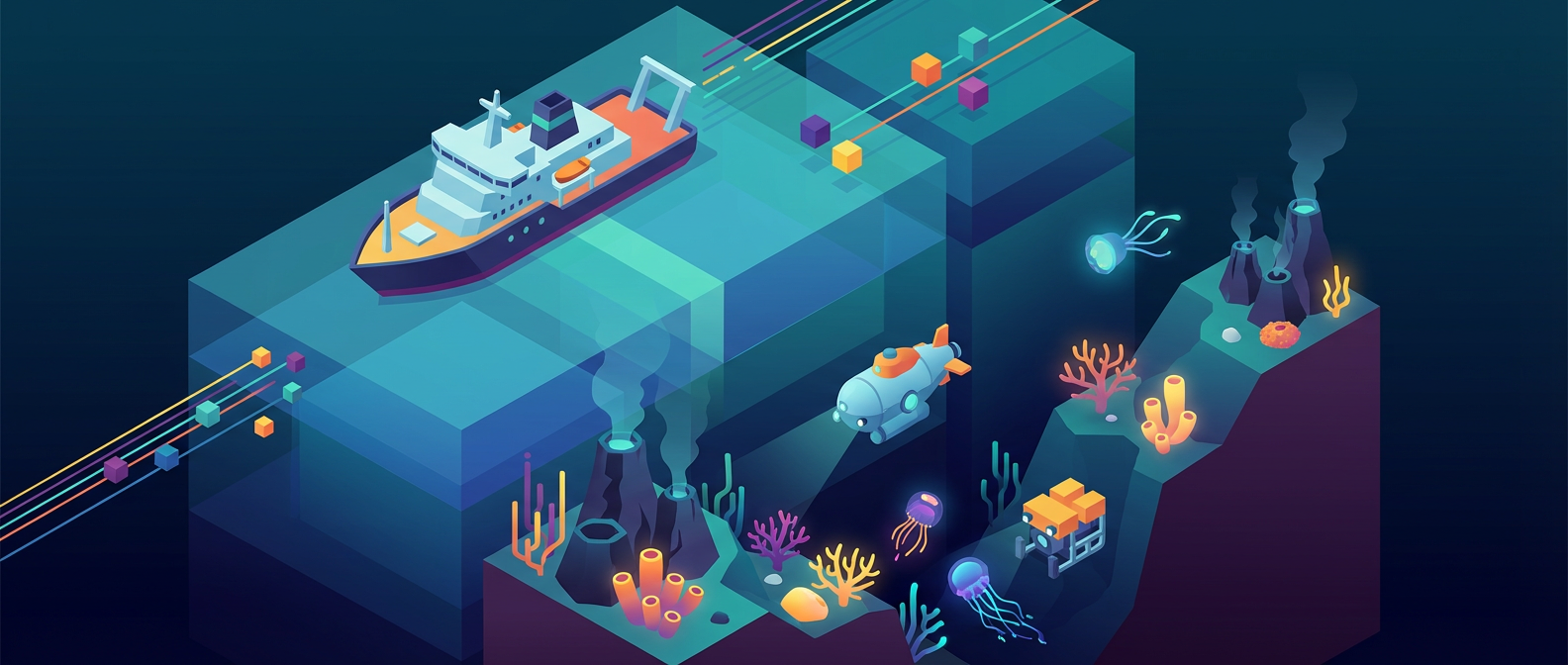
This isn’t just a gap in our knowledge. It’s a massive blind spot that affects everything from climate predictions to biodiversity conservation. We have better maps of Mars than we do of our ocean floor. That’s not hyperbole, it’s an embarrassing reality. The misconception that we’ve thoroughly explored our own planet persists partly because the ocean seems so familiar from the surface. We see it, swim in it, sail across it. But that surface familiarity hides an alien world below.
The challenge isn’t just depth. It’s the sheer scale and brutal conditions. Water pressure increases by roughly one atmosphere every 10 meters of depth. At the deepest points, that pressure would crush a human body instantly. Complete darkness takes over beyond a few hundred meters. Traditional exploration methods hit practical and financial walls fast.
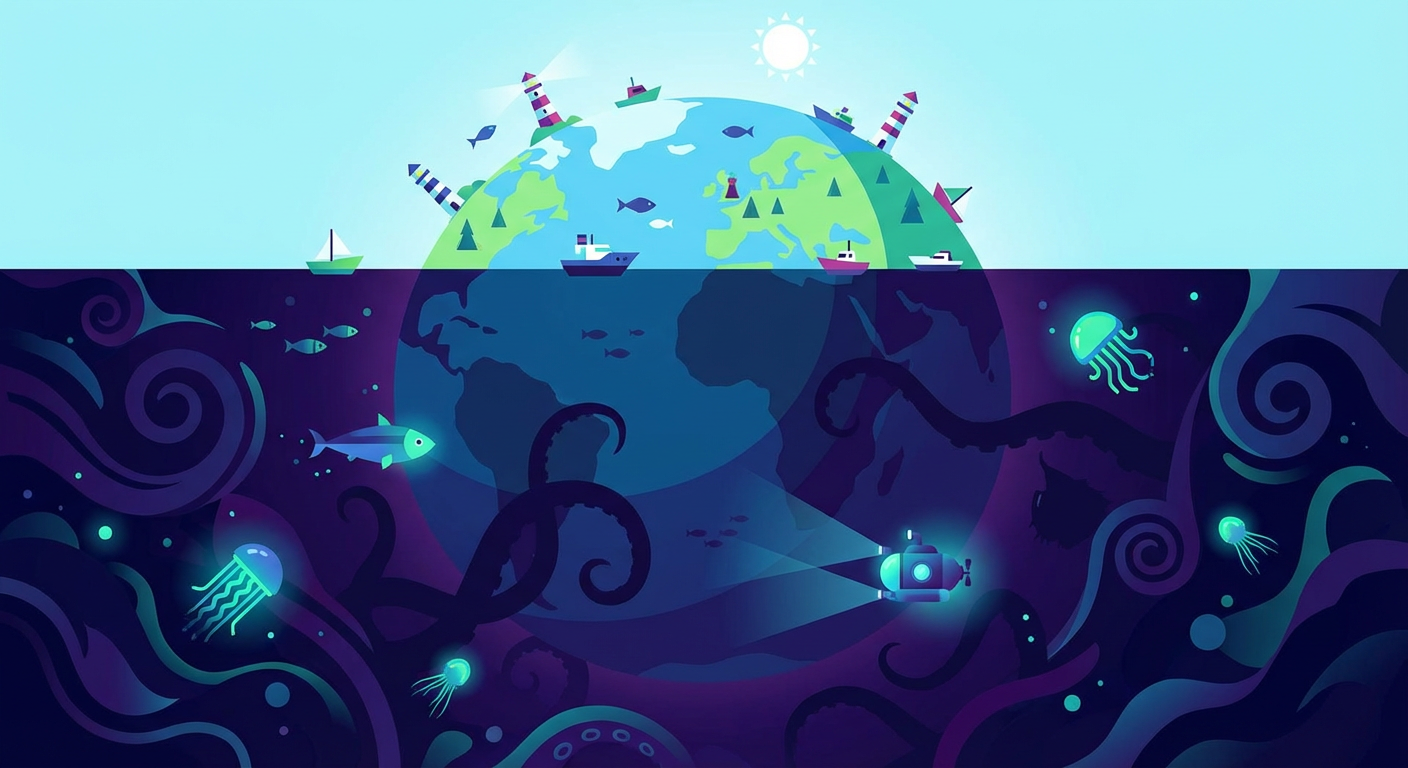
Technology Revolution Under the Waves
Autonomous underwater vehicles are finally changing this situation. These robotic explorers can dive deeper, stay longer, and cost far less than human-operated submersibles. What once required million-dollar expeditions can now be done with increasingly sophisticated drones that map, sample, and record without risking human lives.
The speed of discovery has picked up dramatically. Marine scientists now identify approximately 2,000 new deep-sea species each year. That’s roughly five new species every single day, found in Earth’s most remote habitats. These aren’t just slight variations on known organisms. Many represent entirely new branches of the evolutionary tree, with bizarre adaptations to extreme pressure, perpetual darkness, and chemical-rich environments around underwater volcanic vents.
Organizations like MBARI ocean research institutions are leading these technological advances, developing everything from advanced imaging systems to AI-powered species identification tools. The data they collect is rewriting our understanding of how life adapts to seemingly impossible conditions.
An Ocean Under Siege
As exploration speeds up, so does the urgency of what researchers are finding. Ocean chemistry is changing at the fastest rate in 300 million years, according to paleoclimate records pulled from deep-sea sediments and ancient coral reefs. This acidification process, driven by increased atmospheric carbon dioxide absorption, threatens marine ecosystems in ways scientists are still trying to understand.
Perhaps more shocking is finding plastic pollution in places that seem impossibly remote. Since 2019, research expeditions have found plastic debris even in the Mariana Trench at depths over 11 kilometers. This isn’t just surface pollution that happened to sink. It’s proof that human industrial activity now reaches every corner of the planet, even places no human has ever visited.
The NOAA Ocean Service and similar agencies track these changes, but the scale of monitoring needed far exceeds current capabilities. Each new discovery raises more questions about how ocean systems connect and their role in regulating global climate.
The Deep Sea Mining Dilemma
These discoveries come at a tricky time. Proposals for deep-sea mining operations are advancing rapidly, driven by demand for rare earth metals needed for renewable energy technologies and electronics. The irony is stark: efforts to address climate change through green technology may require destroying some of Earth’s least understood ecosystems.
Marine biologists worldwide are sounding alarms about these mining proposals. The deep sea isn’t a barren wasteland waiting to be exploited. It’s a complex, interconnected system supporting unique life forms that took millions of years to evolve. Many deep-sea creatures grow extremely slowly and reproduce rarely. Recovery from large-scale disturbance could take centuries or millennia.
The timing pressure creates a scientific paradox. Researchers need decades to properly survey and understand these environments, but mining permits are being approved on much shorter timescales. It’s like trying to write a comprehensive field guide while someone else burns down the forest.
Reframing Our Planetary Perspective
The deep ocean messes with our assumptions about exploration and discovery. We imagine frontiers as distant places requiring rocket ships and space suits. But Earth’s most alien environments are accessible by boat, just a few hours from major ports. The creatures living in deep-sea thermal vents are as strange as anything science fiction has imagined, yet they share our planet’s biosphere.
This proximity makes the ocean both more accessible and more vulnerable than space. We can study it more easily, but we can also damage it more easily. Every piece of plastic that washes down a storm drain potentially ends up in these pristine depths. Every ton of carbon dioxide released into the atmosphere eventually dissolves into seawater, changing ocean chemistry.
Understanding our oceans isn’t just about satisfying scientific curiosity. It’s about understanding the life support systems that make Earth habitable. Ocean currents regulate global temperature. Marine ecosystems produce much of the oxygen we breathe. The deep sea stores vast amounts of carbon that could either help stabilize or dramatically destabilize our climate.
The next time you see footage from Mars or read about exoplanet discoveries, remember that equally alien worlds exist beneath our waves. They’re waiting to be explored, understood, and protected. The question isn’t whether we’ll discover them, but whether we’ll do so before we irreversibly alter them.