The Exploration Problem We’re Finally Admitting We Have
Here’s the uncomfortable fact that doesn’t fit neatly into ocean documentaries: roughly 80 percent of Earth’s oceans remain unmapped at meaningful resolution. We have better maps of Mars. That’s not poetic exaggeration—it’s the operational reality that shapes everything marine science does right now. The deep ocean isn’t some distant abstraction. It’s a frontier that covers 71 percent of the planet’s surface, and we’re navigating it almost blind.
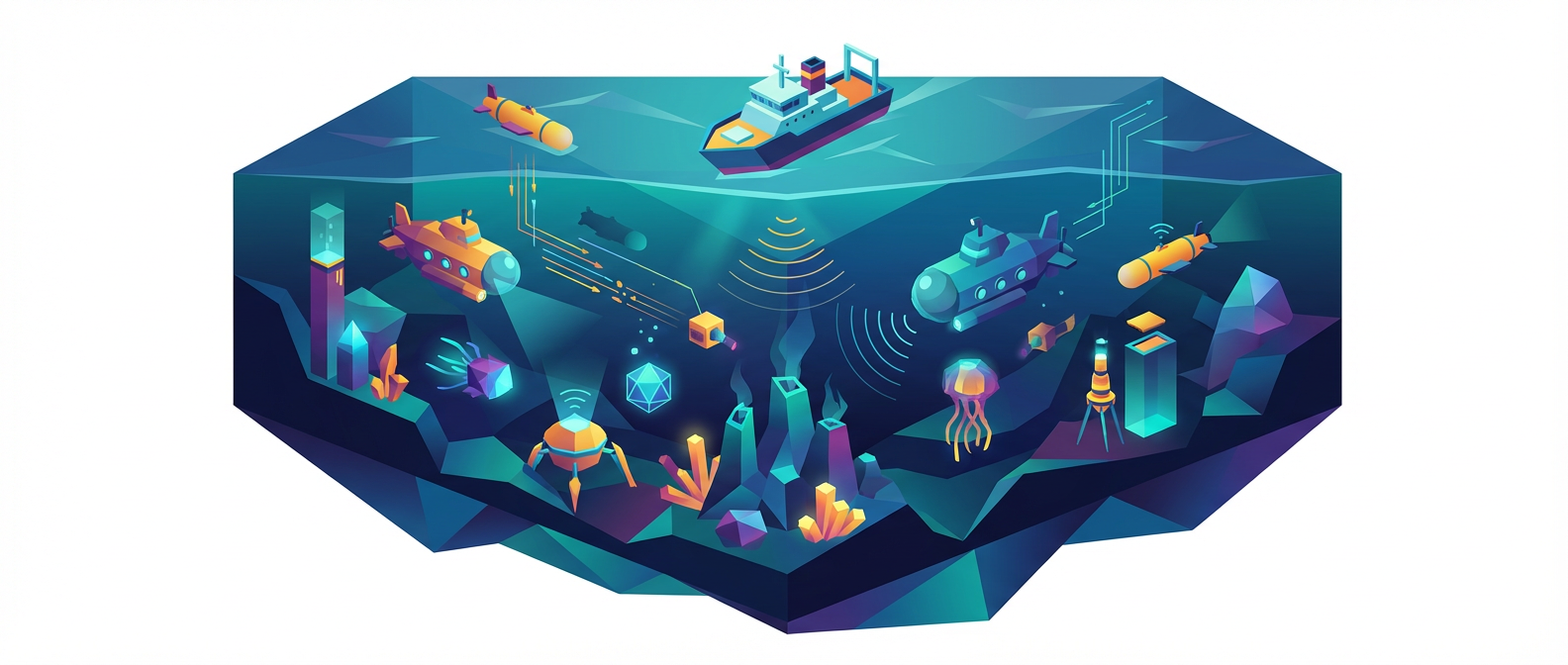
For decades, this invisibility was mostly a research problem. Limited funding. Difficult logistics. The crushing physics of pressure and cold that turns most equipment into expensive scrap metal. But invisibility has become a geopolitical vulnerability. We can’t protect what we can’t see. We can’t regulate what we don’t understand. And now, industrial interests are moving into the abyss faster than science can document what’s already there.
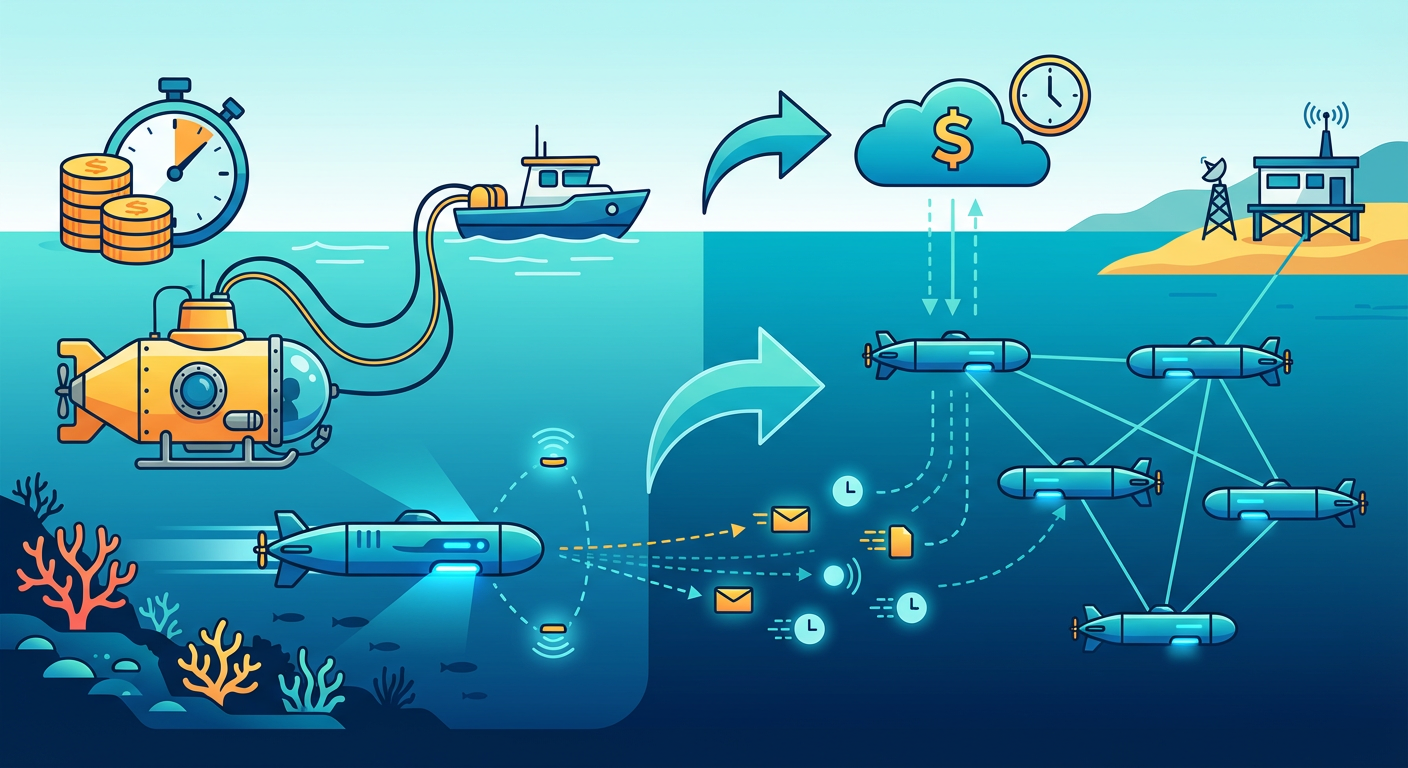
The pace of discovery has actually accelerated dramatically in the last ten years, largely because of one breakthrough: autonomous underwater vehicles that can work continuously without tether or crew support. These robots don’t sleep. They don’t get decompression sickness. They cost a fraction of what manned submersibles demand. MBARI ocean research and similar institutions have deployed fleets of these vehicles, and the data they’re returning has rewritten what we thought we knew about deep ocean ecosystems.
New Species at Industrial Scale, Threatened Before Study
We’re discovering approximately 2,000 new deep ocean species every year now. That number would have seemed impossible a decade ago. These aren’t trivial finds. Each new species represents an evolutionary solution to one of Earth’s most extreme environments. Organisms that thrive at hydrothermal vents have fundamentally changed our understanding of how life could exist on other worlds. Anglerfish bioluminescence inspired real applications in medical imaging. The biochemistry of deep sea organisms has yielded pharmaceutical compounds currently in clinical trials.
The obvious implication is troubling: we’re naming species while simultaneously creating plans to extract polymetallic nodules from the seafloor where many of them live. Deep sea mining proposals are raising alarms across the marine biology community globally, and the alarm is not theoretical hand-wringing. It’s a specific concern about irreversible habitat destruction in environments where recovery timescales operate in geological rather than ecological terms.
The International Seabed Authority hasn’t approved large-scale mining contracts yet, but the pressure is mounting. Battery makers need cobalt and nickel for the energy transition. Investors see low-hanging mineral wealth. Governments see strategic advantage. Meanwhile, marine biologists are racing to baseline ecosystems we barely knew existed five years ago, aware that the data collection window might close before the damage even begins.
The Acidification Math That Should Terrify You
Ocean acidification is happening at the fastest rate in 300 million years according to paleoclimate records. Not since the Permian extinction event, when 96 percent of marine species vanished, has the ocean’s pH shifted this rapidly. That’s not climate communication theater. That’s the calibrated statement of carbonate chemistry specialists comparing current rates to ice core and sediment data spanning hundreds of millions of years.
The mechanism is straightforward enough that you can sketch it on a napkin, but the implications spiral outward in unsettling directions. Atmospheric CO2 dissolves in seawater, forming carbonic acid. The ocean’s buffering capacity is finite. Below certain pH thresholds, organisms that build calcium carbonate shells face thermodynamic problems. Pteropods, the small swimming snails that form the base of many deep ocean food webs, are already showing shell dissolution in waters where acidification has progressed furthest.
What makes the current situation specifically dangerous is how these stressors interact. Oxygen minimum zones are expanding as the ocean warms and mixes less efficiently. Deep water temperatures are rising. Light penetration is being altered by particle loading from coastal runoff and anthropogenic sources. These aren’t independent variables. An organism adapted to specific pH, oxygen, and temperature conditions finds all three changing simultaneously on timescales that don’t allow evolutionary response.
We Found Plastic at Maximum Depth Before We Found Solutions
In 2019, researchers detected plastic pollution at 11 kilometers depth in the Mariana Trench. That depth is extreme enough that the pressure crushes most materials instantly. The fact that plastic survived to reach the trench floor tells you something about polymer durability. The fact that we were surprised to find it tells you something about how recently we’ve actually looked.
Deep sea plastic isn’t just a contamination indicator, it’s a tracer of ocean circulation, a witness to pollution pathways we’re still mapping. NOAA Ocean Service datasets have documented how plastic particles migrate through the water column and accumulate in sediments. They’ve found microplastics in organisms collected from trenches, cold seeps, and mid-ocean ridges. The distribution patterns reveal something we needed to know: there is no away. Deep ocean deposit isn’t a solution to surface pollution. It’s a postponement with consequences we’re only beginning to quantify.
What’s particularly insidious about deep ocean plastic is that it persists in environments with minimal biological degradation activity. Cold temperatures and low metabolic rates mean that microbes process organic matter slowly. Plastics that fragment into the water column can remain for decades or centuries in conditions that actively resist decomposition. We’ve created permanent contamination in permanent darkness.
The Calibrated Uncertainty: What We Know We Don’t Know
The deep ocean is simultaneously being discovered and destroyed before peer review can finish running its course. That’s not poetic frustration, that’s the structural problem we’re navigating right now. Autonomous vehicles have compressed the timeline for data collection. But regulatory and industrial timelines operate independently. By the time we finish mapping an ecosystem and understanding its function, policy decisions affecting that ecosystem may already be made.
This isn’t an argument for abandoning deep ocean research. It’s the opposite. It’s an argument for accelerating baseline documentation with full consciousness of the stakes. Every autonomous vehicle deployed, every new species described, every habitat characterized adds specificity to conservation conversations. Vague claims about protecting ecosystems we don’t understand fail. Detailed knowledge of what actually lives where and why creates leverage for serious protection.
The ocean that remains genuinely unknown isn’t remote or irrelevant. It’s the foundation of planetary habitability. The species we haven’t yet discovered might carry biochemical solutions to problems we haven’t solved. The ecosystems we’re about to industrialize might depend on stability we’re just beginning to appreciate. The discovery rate is accelerating precisely because the window for undisturbed study is closing. That’s the paradox we’re living in. Tell me where your marine science questions are pointing right now.