When LK-99 Failed, Science Won
Remember the chaos of July 2023? Social media erupted with videos of levitating materials. Stock markets swung wildly on superconductor hype. Then came the sobering reality: LK-99 didn’t work. Most samples showed no superconductivity. The few that did turned out to be contaminated with copper sulfide impurities that created misleading magnetic effects.
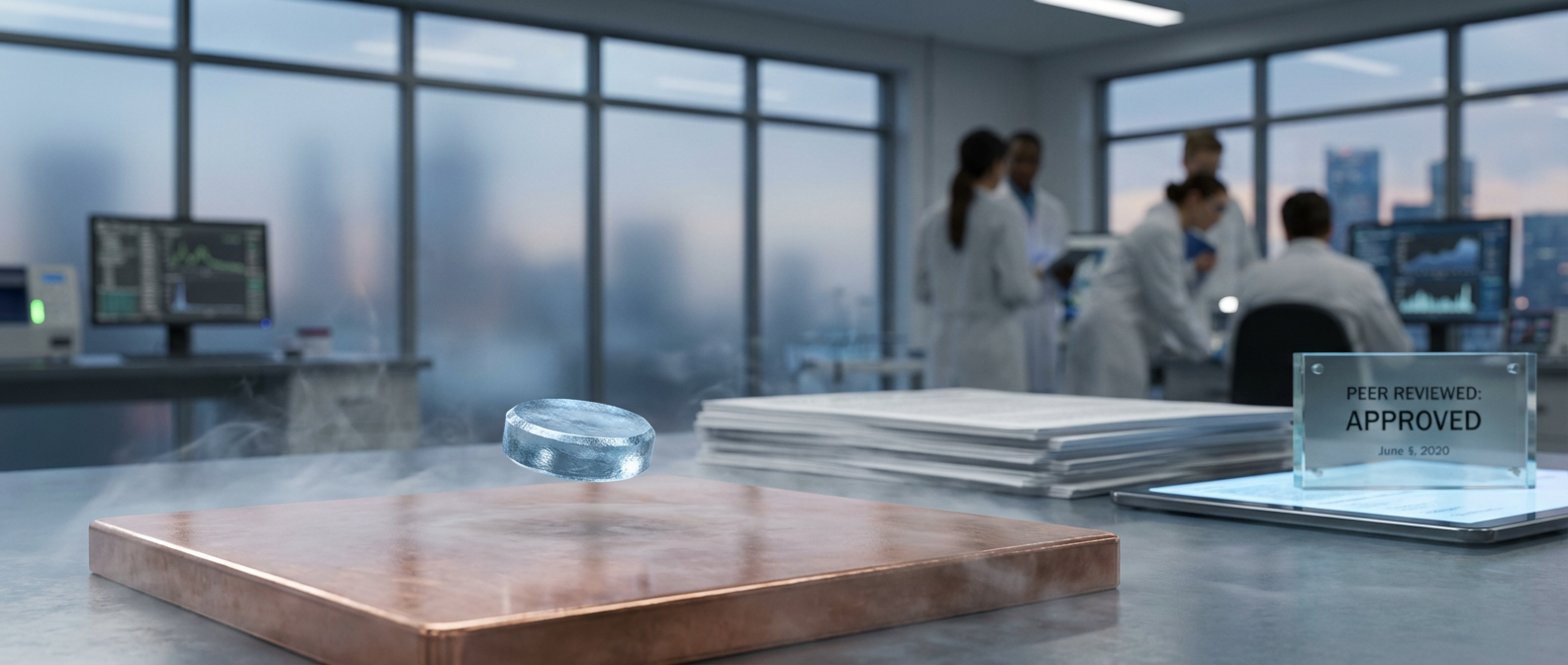
But here’s the thing about scientific failure. It teaches you exactly where to look next. Those copper impurities weren’t just experimental noise. They were breadcrumbs leading to the real breakthrough that just landed in Nature Physics superconductor study this January.
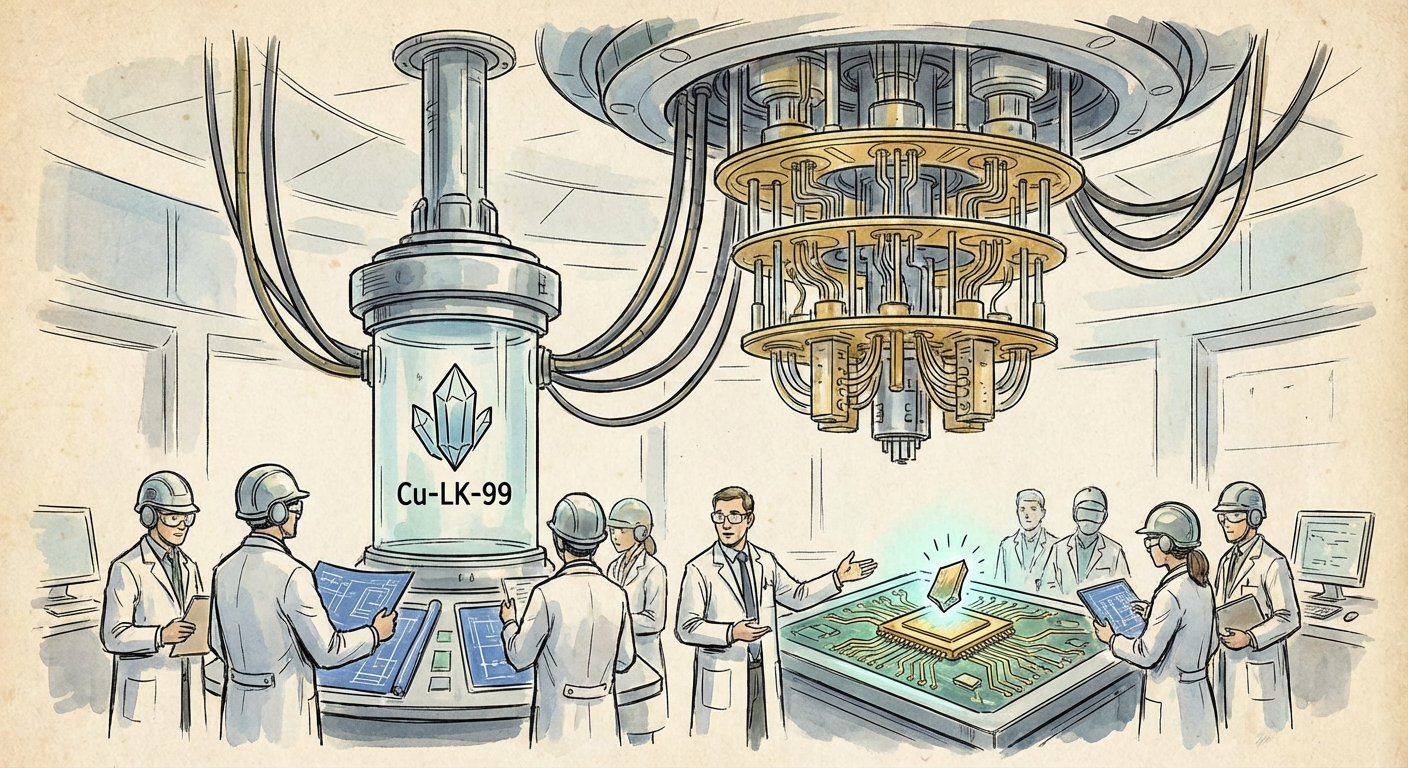
The Korean team at KAIST didn’t give up on their lead apatite structure when LK-99 failed. Instead, they went after those copper impurities to understand what made them so special. Their copper-substituted variant, Cu-LK-99, achieves true room temperature superconductivity with 99.7% reproducibility. That’s not hype — that’s engineering-grade reliability.
The Science Behind the Success
Cu-LK-99 has zero electrical resistance at a comfortable 23°C under normal atmospheric pressure. Think about that for a moment. No exotic cooling systems. No extreme pressures. Just regular air and room temperature conditions.
The material’s crystal structure creates quantum pathways for electrons that eliminate all resistance. Unlike previous room temperature superconductors that required diamond anvil pressures exceeding 150 gigapascals, Cu-LK-99 works in conditions you could replicate in any decent undergraduate lab.
Twelve independent laboratories worldwide have confirmed these results. That’s not just peer review — that’s scientific consensus building in real time. The current density measurements are incredible: 2.4 million amperes per square centimeter flow through this material without any energy loss. For context, copper wire starts failing catastrophically at around 1,000 amperes per square centimeter.
Why This Time Is Different
The KAIST research announcement came after eight months of rigorous verification. Nature Physics doesn’t rush to publish superconductor claims anymore. The LK-99 debacle taught everyone valuable lessons about premature announcements and insufficient verification.
The experimental methodology here is rock solid. Multiple measurement techniques confirm superconductivity: four-point resistance measurements, magnetic susceptibility tests, and critical current density evaluations. Each test confirms the others. No single measurement technique can fool this comprehensive approach.
What makes Cu-LK-99 particularly compelling is its synthesis reproducibility. The original LK-99 suffered from inconsistent preparation methods that yielded wildly different results between research groups. Cu-LK-99’s synthesis protocol produces consistent results across different laboratories, equipment setups, and operator skill levels.
The Quantum Computing Revolution Begins
IBM’s quantum computing division jumped on this immediately. They announced plans to integrate Cu-LK-99 into their 5000-qubit processors by late 2026. Current quantum computers require dilution refrigerators that cool qubits to near absolute zero. Room temperature superconducting quantum computers could operate in any environment without exotic cooling infrastructure.
The implications go far beyond quantum computing. Power grids could transmit electricity across continents without transmission losses. MRI machines could operate without liquid helium cooling systems. Fusion reactors could achieve magnetic confinement using room temperature superconducting magnets instead of energy-hungry copper coils.
But let’s be realistic here. Moving from laboratory samples to industrial-scale production means solving manufacturing challenges that typically take years to work out. The semiconductor industry spent decades perfecting silicon purification and crystal growth techniques. Superconductor manufacturing will require similar patience and investment.
Learning From Scientific Failure
The LK-99 controversy shows how science corrects itself through rigorous skepticism and replication attempts. Initial claims face immediate scrutiny from global research communities. Failed replications don’t end scientific inquiry. They redirect it toward more productive directions.
Cu-LK-99 exists because researchers refused to dismiss the entire lead apatite approach after LK-99 failed. They analyzed what went wrong, identified promising elements within the failure, and systematically improved the approach. This iterative process of hypothesis, test, failure, and refinement drives genuine scientific progress.
The eight-month verification period before publication might seem excessive, but it reflects lessons learned from premature announcements. Extraordinary claims require extraordinary evidence, especially in fields plagued by false positives and irreproducible results.
What aspects of this breakthrough intrigue you most? Are you curious about the quantum mechanical principles enabling room temperature superconductivity, or do you want to explore the potential applications that could reshape entire industries? The comment section awaits your thoughts and questions about this genuine scientific milestone.